
As energy costs rise sharply and the push towards Net Zero gathers pace, business owners and householders are keen to find ways to cut both their bills and their carbon footprint with renewable energy as the obvious solution.
Currently more than 1.6 million UK homes already have photovoltaic panels, and homes with solar panels are in high demand, with around seven in ten people saying they would be likely to buy a property with rooftop photovoltaics. Meanwhile, the market for small-scale domestic wind turbines is expected to expand significantly in the coming years.
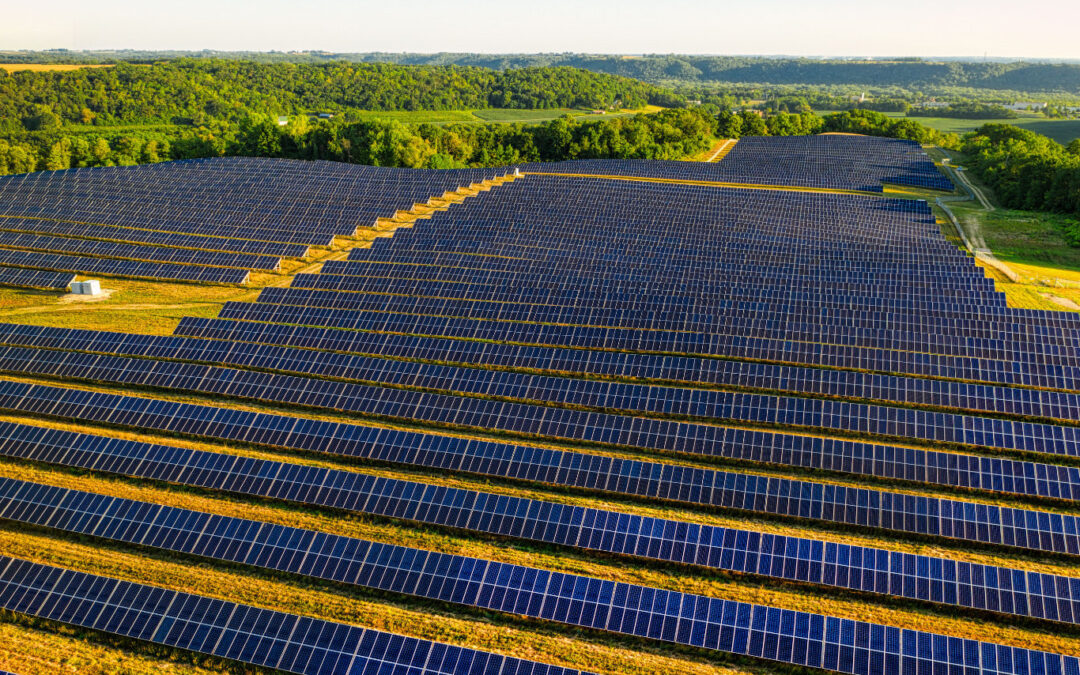
2025 was the strongest year on record for solar deployment, with 269,000 installations completed across the UK according to recent government figures. Around 95% of these were rooftop solar, installed on homes, businesses and other buildings. This equates to a new installation every two minutes.
Businesses, especially those with property portfolios, are also actively pursuing the cost synergies of rooftop and single turbine installations backed by PPAs (power purchase agreements). While government data does not differentiate between business and household installations, one study suggests that commercial and industrial (C&I) installations now account for about 42% of total UK solar capacity and up to 70% of all solar installations by volume.
Funders will typically require some level of title diligence on the property owner’s title to ensure that there are no legal impediments that could ultimately affect the investment value, operation of the asset or loan repayments. Beyond confirming site ownership where titles can often be complex, there are considerations around third-party rights and consents (tenants and mortgagees) in buildings with multiple occupants.
However, undertaking full title due diligence to ensure a property is free from legal or financial claims can add significantly to the cost of transactions where low levels of borrowing are concerned or in low value portfolios – and could cause long delays.
Why automated title insurance is a powerful option
As demand increases so too does the need for developers and funders to improve on the investment and delivery timelines. There’s another option to carrying out costly and convoluted full title due diligence – and that’s to replace this process entirely by taking out a title insurance policy.
A title insurance policy will cover all potential known risks which appear on the Land Registry title, as well as unknown title risks which cannot be identified, and transactional risks such as lack of consent as outlined above.

Until recently, obtaining title insurance could be time-consuming in itself. But today, comprehensive title insurance policies can be created instantly with Incept’s automated, algorithm -powered platform that connects directly to real-time Land Registry data, underwritten by leading risk management solutions providers.
The benefits of title insurance are two-fold: lower transaction costs and faster deal flows. For volume transactions this could mean considerable savings per site and per portfolio in our experience on average by 60%.
Completions should happen more smoothly, in less time, with lower risk – especially where the policy generation process is seamless.
As properties that are more eco-friendly and less expensive to power become more and more sought after, those with solar panels or single wind turbines are likely to make up an ever-larger share of property purchases or commercial leases. as we look ahead.
Therefore, solutions that can eliminate any risk inherent with solar or wind power installations, streamline the transaction process and keep costs under control are vital. Now that it’s so simple to take out title insurance, doing so makes more sense than ever.